
Key takeaways
- Circular saws compared on power, depth of cut, bevel range and weight, from a budget laser-guided SKIL to a magnesium worm drive and a cordless pick.
A circular saw turns sheet goods and framing lumber into a project: it breaks down plywood, rips boards to width, crosscuts two-by stock and bevels rafters and deck boards. Saws that do this work well share a 7-1/4-inch blade and enough depth of cut to pass through two-by lumber in a single pass, but they split along three lines that matter more than raw power. The first is layout: a sidewinder mounts the motor beside the blade for a light, compact saw, while a worm drive puts the motor behind the blade for more torque and a longer body. The second is power source, corded or battery. The third is the detail set around the blade: bevel range, a brake, and a laser or lights to follow the cut line.
The five picks below cover those shapes. A mid-range corded sidewinder with an electric brake leads as the all-round choice, a faster contractor sidewinder follows, and a budget corded saw adds a laser guide for occasional builders. A magnesium worm drive covers the premium torque end of the category, and a brushless cordless model closes the list for 20V MAX owners. Every figure in this guide comes from published maker and listing data, and batteries are noted where sold separately.
As an Amazon Associate, we earn from qualifying purchases.
Quick answer
The DEWALT DWE575SB is the circular saw most readers should buy: a 15-amp corded sidewinder with an electric brake, a 57-degree bevel and a 2-9/16-inch depth of cut at 8.8 pounds. Framers who want more torque should look at the magnesium SKILSAW worm drive, while the DEWALT DCS570B covers cordless work on the 20V MAX platform.
The five picks in detail
DEWALT 7-1/4-Inch Circular Saw with Electric Brake (DWE575SB)
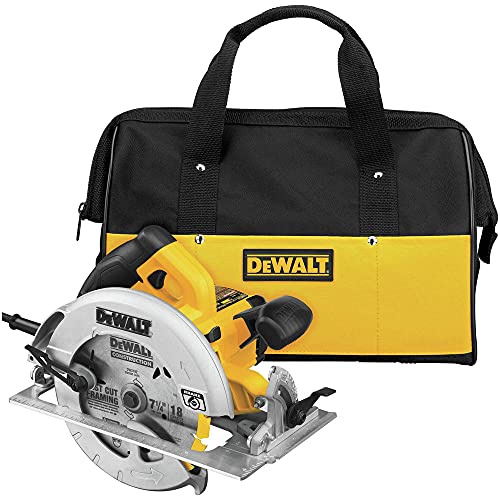
The DWE575SB is the mid-range pick and the most balanced saw here. At 8.8 pounds it sits among the lightest full-size sidewinders, yet its 15-amp motor and 2-9/16-inch depth of cut clear two-by lumber and stacked sheet goods in one pass. The 57-degree bevel range is the widest in this group, with detents at 22.5 and 45 degrees.
The electric brake separates it from the other corded sidewinders. Releasing the trigger halts the blade quickly instead of letting it spin down on its own, which speeds up repetitive cutting. An integrated dust blower keeps the cut line visible, and the saw ships with a carbide-tipped blade, a blade wrench and a contractor bag.
Specs
- :
- Power source: Corded
- Motor: 15 amp
- No-load speed: 5,200 RPM
- Blade: 7-1/4 inch carbide-tipped, included
- Depth of cut: 2-9/16 inches at 90 degrees
- Bevel capacity: 57 degrees, detents at 22.5 and 45 degrees
- Weight: 8.8 pounds
- Extras: Electric brake, integrated dust blower
- Model: DWE575SB
Makita 7-1/4-Inch Circular Saw (5007F)

The 5007F is the premium corded sidewinder here, built for framing and siding work. Its 15-amp motor turns the blade at 5,800 RPM, the highest blade speed in this group, and Makita rates the motor at 2,000 watts out. Two built-in LED lights shine on the line of cut from both sides of the blade, a genuine help in dim garages, and the heavy-gauge aluminum wraparound base tracks straight through long rips.
The trade-offs are weight and bevel range. At 11.1 pounds the Makita is the heaviest sidewinder in the list, and its bevel capacity stops at 45 degrees where the two DEWALT saws reach 57. Depth of cut still clears two-by stock in one pass, and its lower guard retracts smoothly on bevel and narrow cuts. Readers who value blade speed and build quality over a wide bevel range will pick this one.
Specs:
– Power source: Corded
– Motor: 15 amp, 2,000 watts out
– No-load speed: 5,800 RPM
– Blade: 7-1/4 inch, 5/8 inch arbor
– Depth of cut: 2-3/8 inches at 90 degrees, 1-3/4 inches at 45 degrees
– Bevel capacity: 45 degrees
– Weight: 11.1 pounds
– Extras: Two built-in LED lights, heavy-gauge aluminum wraparound base
SKIL 7-1/4-Inch Circular Saw with Laser Guide (5280-01)
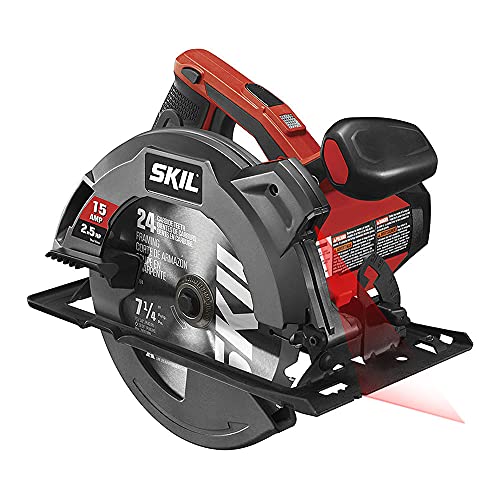
The 5280-01 is the budget pick, and it gives up less than the tier suggests. The 15-amp motor runs at 5,300 RPM, the bevel reaches 51 degrees with a positive stop at 45, and the depth of cut clears two-by lumber in a single pass. At 8.7 pounds it is also the lightest saw in this group, which occasional builders will feel over a long afternoon.
Its headline feature is the single-beam laser guide, which projects the cut line ahead of the blade for newer users. An integrated dust blower clears the same line of sawdust, and a spindle lock makes blade changes a one-wrench job. The box holds a 24-tooth carbide-tipped blade, a blade wrench and a carrying bag. Readers who cut a few weekends a year get the full 7-1/4-inch format here without paying for pro-tier build.
Specs
- :
- Power source: Corded
- Motor: 15 amp
- No-load speed: 5,300 RPM
- Blade: 7-1/4 inch 24-tooth carbide-tipped, included; 5/8 inch arbor
- Depth of cut: 2-7/16 inches at 90 degrees, 1-15/16 inches at 45 degrees
- Bevel capacity: 51 degrees, positive stop at 45 degrees
- Weight: 8.7 pounds
- Extras: Single-beam laser cut guide, dust blower, spindle lock
SKILSAW 7-1/4-Inch Lightweight Worm Drive Circular Saw (SPT77WML-01)
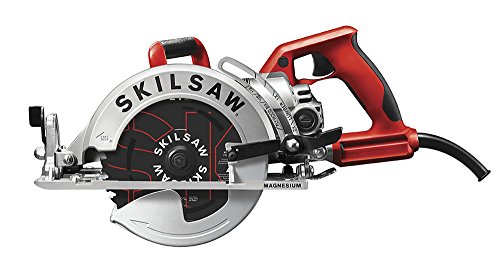
The SPT77WML-01 is the premium pick and the only worm drive in the group. The layout puts the motor in line behind the blade and drives it through oil-lubricated worm gears, delivering the high torque that long rips in dense or wet lumber demand. The blade sits on the left of the body, so a right-handed user looks straight down the cut line without leaning across the saw. SKILSAW builds the housing, foot and gear housing from magnesium, holding the weight to 11.5 pounds where older worm drives ran far heavier.
The 15-amp Dual-Field motor is wound for saw work and turns at 5,300 RPM, and the bevel capacity reaches 53 degrees. The Cut-Ready depth-of-cut system puts common depth settings on a gauge at the shoe, and an anti-snag lower guard retracts cleanly on angled entries. A 24-tooth carbide blade and a multi-function wrench come in the box. Framers who rip all day will not find a lighter way into this layout.
Specs
- :
- Power source: Corded
- Motor: 15 amp Dual-Field
- No-load speed: 5,300 RPM
- Blade: 7-1/4 inch 24-tooth carbide, included; diamond arbor
- Depth of cut: 2-3/8 inches at 90 degrees, 1-15/16 inches at 45 degrees
- Bevel capacity: 53 degrees
- Weight: 11.5 pounds
- Build: Magnesium housing, foot and gear housing
- Model: SPT77WML-01
DEWALT 20V MAX Circular Saw, Tool Only (DCS570B)

The DCS570B is the cordless pick, a brushless 7-1/4-inch saw for the 20V MAX platform. It matches the corded DWE575SB on depth of cut and bevel capacity: 2-9/16 inches at 90 degrees and 57 degrees, so two-by lumber and steep bevels stay single-pass work away from an outlet. The brushless motor turns at 5,200 RPM, and an electric brake halts the blade when the trigger comes up.
At 7.5 pounds for the bare tool it is the lightest saw here before a battery goes on, and the box holds the saw, a 24-tooth blade and a blade changing wrench. The battery and charger are separate purchases, so it suits readers already holding 20V MAX packs best; everyone else should weigh the corded picks first. DEWALT covers the tool with a 3-year limited warranty.
Specs
- :
- Power source: 20V MAX battery, sold separately
- Motor: Brushless
- No-load speed: 5,200 RPM
- Blade: 7-1/4 inch 24-tooth, included
- Depth of cut: 2-9/16 inches at 90 degrees
- Bevel capacity: 57 degrees
- Weight: 7.5 pounds, tool only
- Extras: Electric brake
- Model: DCS570B
How to choose
Begin with depth of cut. A 7-1/4-inch saw needs at least 2-3/8 inches of depth at 90 degrees to pass through two-by lumber in one cut, and every pick here clears it. Shallower saws in smaller blade sizes suit trim and flooring but force a second pass, or a flip of the board, on framing stock.
Layout comes next. A sidewinder such as the DWE575SB, 5007F and 5280-01 is shorter, lighter and simpler, and it suits most building work. A worm drive such as the SKILSAW trades weight for torque and puts the blade on the left with a clear view of the line, which long ripping sessions reward. Neither layout cuts more accurately on its own; the guide or straightedge clamped to the work decides that.
Power source is the third call. A corded saw runs all day at full strength and never waits on a charger, which suits a workshop or a powered framing site. A cordless saw such as the DCS570B earns its place on roofs, ladders and punch-list work, and suits readers whose battery platform already runs their other tools.
Finish with the detail set. A bevel range past 45 degrees, 51 to 57 degrees across these picks, covers compound cuts on rafters and trim without a workaround. An electric brake shortens the pause between cuts. A laser guide or LED lights help follow a line in poor light, and honest weight figures matter more than motor ratings once a saw is overhead: the spread here runs from 7.5 to 11.5 pounds.
Who should skip
Skip this whole group if the work is finish carpentry that lives or dies on splinter-free edges in veneered plywood. A track saw with a splinter guard and a fine blade is the right tool there.
Skip it as well if the cutting is mostly metal or masonry; those materials call for a metal-cutting saw or an abrasive or diamond setup. Readers who mainly fit flooring or cut thin trim may be happier with a compact 6-1/2-inch or 4-1/2-inch saw, which trades depth for a smaller body that is easier to guide one-handed.
FAQ
Is a 7-1/4-inch circular saw enough for framing lumber?
Yes. Two-by lumber is 1-1/2 inches thick, and every saw here cuts at least 2-3/8 inches deep at 90 degrees, so each one passes through framing stock in a single cut.
What is the difference between a sidewinder and a worm drive saw?
A sidewinder mounts the motor beside the blade, driving it directly. A worm drive mounts the motor behind the blade and turns it through worm gears, which adds torque and length and moves the blade to the left side of the body. Sidewinders suit general building; worm drives suit long rips and daily framing.
Can a cordless circular saw match a corded one?
On published figures, the brushless DCS570B matches the corded DWE575SB for depth of cut and bevel range. The difference is run time: a corded saw cuts until the job ends, while a cordless saw depends on the packs on hand. For a full day of framing, corded remains the safer default.
Do these five saws take the same blades?
Nearly. Four of the five take any 7-1/4-inch blade with a 5/8-inch round arbor, and framing, finishing and plywood blades are sold everywhere. The SKILSAW worm drive uses a diamond-shaped arbor, and most framing blades include that knockout shape, so check the blade packet before buying.
Final verdict
For most readers the DEWALT DWE575SB is the buy: light, deep-cutting, wide in bevel and fitted with a brake, it covers framing, decks and sheet goods. The Makita 5007F is the corded upgrade for blade speed and build, the SKIL 5280-01 is the budget route with a laser guide, and the SKILSAW SPT77WML-01 stands alone for worm drive torque in a magnesium body. Readers already holding 20V MAX batteries should take the DCS570B for the same depth and bevel figures with no cord.
Product and ASIN Reference
| Product | ASIN |
|---|---|
| DEWALT Circular Saw with Electric Brake (DWE575SB) | B007QUZ16A |
| Makita Circular Saw (5007F) | B004YIALZI |
| SKIL Circular Saw with Laser Guide (5280-01) | B01BD81BLO |
| SKILSAW Worm Drive Circular Saw (SPT77WML-01) | B00B7EUS46 |
| DEWALT 20V MAX Circular Saw (DCS570B) | B06ZZY8KDL |
FAQ
Is a 7-1/4-inch circular saw enough for framing lumber?
What is the difference between a sidewinder and a worm drive saw?
Can a cordless circular saw match a corded one?
Do these five saws take the same blades?
More from Amazon
Programs that pair well with the guide above. Offers and eligibility are set by Amazon and may change.
Free shipping on eligible items, Prime Video and more. Eligible new members can start with a free trial.
Start a Prime free trialAudiobooks and podcasts to listen to on the go. Eligible new members can start with a free trial.
Try Audible freeAd-free music streaming. Eligible new subscribers can start with a free trial.
Try Music Unlimited freeA free business account with business pricing and bulk-buying tools for work, shop or home office.
Create a business accountAs an Amazon Associate we earn from qualifying purchases.







Write Your Review
No reviews yet. Be the first to share your experience!