
Our Short List of 3

- Diameter: 21 inches
- Weight: 1.9 pounds
- Material: vinyl-covered laminate inserts between vinyl skins
- Fold: trifold, collapses to one-sixth of deployed size

- Diameter: 3 feet (36 inches)
- Material: 600-denier orange polyester
- Weighted perimeter: 3.2 pound zinc-coated cable
- Fold: collapses to one-third of deployed size

- Diameter: 55 cm (about 21.65 inches)
- Weight: 0.92 pounds (14.7 ounces)
- Material: foldable waterproof material
- Colors: yellow and dark gray
All 4 Picks at a Glance
| Product | Specs | Action |
|---|---|---|
| Hoodman LP21 Weighted Trifold Drone Landing Pad |
| Check price on Amazon |
| Hoodman 3 Foot Weighted UAV Drone Landing Pad |
| Check price on Amazon |
| CQT Drone Landing Pad, 55 cm |
| Check price on Amazon |
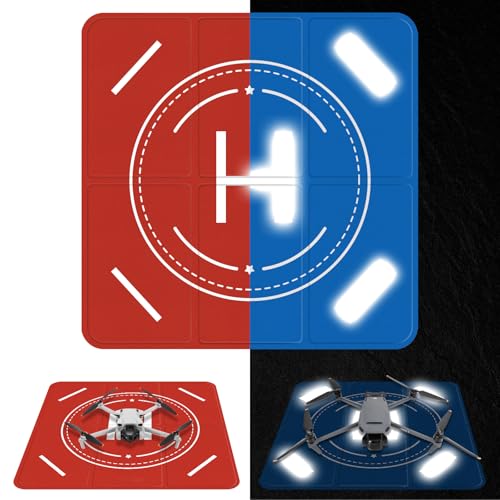 FPVtosky Nighttime Reflective Drone Landing Pad, 25.2 Inch |
| Check price on Amazon |
Key takeaways
- Compare five drone landing pads for safe takeoffs and landings, from a compact trifold mat to weighted pro pads, and pick the right size for your drone.
A bare patch of grass looks harmless until the prop wash hits it. Dust, sand, loose gravel, and wet turf get pulled straight up into motors, gimbals, and lenses, and a soft or uneven surface can tip a small drone on touchdown. A landing pad fixes the ground itself. It gives every takeoff and landing the same clean, flat, high-visibility target, whether the pilot is flying from a beach, a muddy field, a dusty trail, or a paved parking lot.
The right pad depends on the drone and the flying routine. Small Mini-class aircraft need only a compact mat, while larger Mavic and enterprise models need a wider target and more weight to stay put in wind. This guide compares five pads that cover that whole range, from a lightweight foldable mat to a weighted professional pad, with the size, material, and anchoring of each one spelled out so the choice is straightforward.
As an Amazon Associate, we earn from qualifying purchases.
Table of Contents
- Quick Answer
- Hoodman LP21 Weighted Trifold Drone Landing Pad
- Hoodman 3 Foot Weighted UAV Drone Landing Pad
- PGYTECH Foldable Drone Landing Pad, 75 cm
- CQT Drone Landing Pad, 55 cm
- FPVtosky Nighttime Reflective Drone Landing Pad, 25.2 Inch
- How to Choose
- Who Should Skip It
- Frequently Asked Questions
- Conclusion
- Product and ASIN Reference
Quick Answer
For most pilots flying a Mini, Air, or Mavic drone, a 22 to 30 inch foldable pad is the sweet spot: big enough to land on comfortably, small enough to carry. Pilots who fly in wind or from hard surfaces should step up to a weighted pad, and pilots who fly after dark should pick a reflective one. The five pads below cover every one of those cases.
Hoodman LP21 Weighted Trifold Drone Landing Pad
- Diameter: 21 inches
- Weight: 1.9 pounds
- Material: vinyl-covered laminate inserts between vinyl skins
- Fold: trifold, collapses to one-sixth of deployed size
The Hoodman LP21 is the most portable serious pad in this guide. It is a 21 inch diameter trifold pad built from six vinyl-covered laminate inserts sandwiched between two rugged vinyl outer skins, and the whole thing weighs 1.9 pounds. That weight is the point: the inserts conform to turf and hug uneven ground, so the pad stays put under rotor thrust without stakes. It folds down to one-sixth of its deployed size with three quick folds, and a rubber belt holds the folded pad closed for packing.
The LP21 is made for small multi-rotor aircraft. Hoodman lists it for the DJI Mini 4 Pro, Mini 3 Pro, Mavic series, and Spark, and the 21 inch target is a comfortable fit for Mini and Air class drones. A Mavic 3 series aircraft fits too, though with tighter margins around the edges, so pilots of larger drones should think about the 3 foot Hoodman instead. The vinyl surface wipes clean after muddy or dusty sessions, and the bright orange face with its bold H marking and compass rose is easy to spot from the air on the way home.
Setup takes seconds. Remove the rubber belt, unfold the pad, and it is ready. There is nothing to stake, inflate, or assemble, which makes it a good match for hikers and travel photographers who land in a different spot every flight. The trade-off for that portability is size: 21 inches leaves little room for error on a windy landing, and the pad has no stakes for anchoring on hard pavement, where its weight alone does the holding. Pilots who fly from beaches will also notice that fine sand can work its way between the laminate layers over time, so a quick shake and wipe after a beach session keeps the folds moving freely. For a first weighted pad, though, the LP21 is hard to fault: it is the smallest pad here that still behaves like a professional tool rather than a piece of fabric.
Hoodman 3 Foot Weighted UAV Drone Landing Pad
- Diameter: 3 feet (36 inches)
- Material: 600-denier orange polyester
- Weighted perimeter: 3.2 pound zinc-coated cable
- Fold: collapses to one-third of deployed size
The Hoodman 3 foot pad is the professional workhorse of this guide. It is a 36 inch diameter pad made from 600-denier orange polyester, with a 3.2 pound weighted zinc-coated perimeter cable that holds it flat on turf, pavement, and rooftops without stakes. It springs open from its 13 inch carry bag and folds back down to one-third of its deployed size, so it packs small for a pad of this size.
That weighted edge is what separates it from the lightweight mats. A thin fabric pad can lift, ripple, or slide when prop wash hits it, especially on hard surfaces where stakes cannot be driven in. The Hoodman perimeter cable keeps the edge down through takeoff and landing, which matters for mapping, inspection, and real estate pilots who fly the same site repeatedly and need the same clean surface every time. Hoodman lists it for the Matrice 4E, Mini 4 Pro, Mini 3 Pro, Mavic, and Spark, and the 3 foot target gives larger aircraft like the Mavic and Phantom class plenty of landing margin.
The cost of that stability is bulk. A 3 foot pad is the heaviest and bulkiest option here, and it is more pad than a Mini-only pilot needs. It is also the most expensive class in the guide, firmly in the premium group. Pilots who fly small drones from grass on calm days will get the same clean surface from a smaller, lighter pad. But for pilots who fly in wind, from concrete, or with larger aircraft, the 3 foot Hoodman is the pad that stays where it is put. One practical note: the pad springs open with some force when released from its bag, so new owners should open it away from the drone and clear of faces. Once open, it lies flat on its own, and the carry bag keeps it contained between sites without a separate case.
PGYTECH Foldable Drone Landing Pad, 75 cm
The PGYTECH 75 cm pad is the mid-range all-rounder. It is a 75 cm diameter pad, about 29.5 inches across, made from waterproof double-sided nylon with a bright two-tone face that stays visible from the air. It folds flat for packing and opens quickly at the flying site, and the nylon surface shrugs off rain, mud, and dust, then wipes clean.
The 75 cm size is the reason to pick this one. It is roomy for Mini and Air class drones and still generous for Mavic models, without becoming as cumbersome as a 110 cm mat. PGYTECH lists it for the DJI Mini 4, Mini 3, Mini 2, Mavic 3, Air 2S, and Air 2, which covers most consumer and prosumer aircraft. Pilots who want a smaller or larger target can look at the same line in 55 cm and 110 cm, but the 75 cm version is the flexible middle that suits the widest range of drones.
One thing to plan for: this is a lightweight nylon pad, not a weighted one, so on windy days or hard ground it benefits from anchoring. The pad relies on its fold and its flat lay rather than a weighted edge, and strong prop wash on a slick surface can shift a light mat. Pilots who regularly fly in gusty conditions should weigh that against the Hoodman weighted pads. For calm to moderate days, though, the PGYTECH gives a large, clean, highly visible landing zone at a mid-range position in the guide. The double-sided design also means a scuffed or stained face can simply be flipped over, which extends the useful life of the pad when one side picks up mud or wear faster than the other.
Specs
- Diameter: 75 cm (about 29.5 inches)
- Material: waterproof double-sided nylon
- Fold: foldable, packs flat
- Anchoring: flat lay, no weighted edge
- Compatibility: DJI Mini 4, Mini 3, Mini 2, Mavic 3, Air 2S, Air 2
- Model: PGY-AC-308
CQT Drone Landing Pad, 55 cm
- Diameter: 55 cm (about 21.65 inches)
- Weight: 0.92 pounds (14.7 ounces)
- Material: foldable waterproof material
- Colors: yellow and dark gray
The CQT 55 cm pad is the budget pick that does the basics well. It is a 55 cm diameter pad, about 21.65 inches across, made from foldable waterproof material in a yellow and dark gray two-tone design. It weighs 0.92 pounds, or 14.7 ounces, so it adds almost nothing to a drone bag, and it folds down small enough to slip into a backpack pocket.
That light weight is both the appeal and the limit. On grass, the pad lays flat and gives small drones a clean target, and the bright yellow face is easy to find from the air. It fits a long list of aircraft, including the DJI Mavic 3 Pro, Mini 2 SE, Air 2 and 2S, Mini 3 and 4 Pro, Mavic 2, Holy Stone models, FPV drones, and the Avata 2. For a pilot who flies a Mini or Air drone on calm days and wants the cheapest way to keep dust out of the motors, this pad covers the job.
Wind is where the CQT shows its budget nature. At under a pound, it has no weighted edge and no real resistance to gusts or prop wash on hard ground, so pilots should expect to anchor it or pick calm days. It is also sized for small and mid-sized drones; a large aircraft will fill most of the 55 cm target. Used within those limits, it is a practical, packable pad that earns its place in the budget group. It also makes a sensible second pad: many pilots keep a cheap lightweight mat in the car for quick flights and save the weighted pad for planned shoots, and the CQT is light and cheap enough to live in a glove box or a side pocket without a second thought.
FPVtosky Nighttime Reflective Drone Landing Pad, 25.2 Inch
- Size: 64 by 64 cm (25.2 by 25.2 inches)
- Weight: 730 grams
- Material: double-sided PU leather
- Surface: nighttime reflective, blue and red sides
The FPVtosky 25.2 inch pad is the night-flying pick. It is a 64 by 64 cm square pad, about 25.2 inches across, made from double-sided PU leather with a nighttime reflective surface that catches the drone’s own lights on descent. The two sides are blue and red, so the pad stays visible in daylight too, and the PU leather surface is waterproof and easy to rinse clean after muddy landings.
The pad weighs 730 grams and folds down to 31.7 by 22.2 by 2 cm, small enough to fit in most drone cases. That combination of reflective markings and packable size is what makes it useful for pilots who fly at dusk or after dark, when a plain dark mat disappears against the ground. FPVtosky lists it for the DJI Mini 5, Mini 4, Mini 3 Pro, Neo, Flip, Mini 2, Mini, SE, Mavic 3, Mavic 3E, Mavic 3T, Air 2S, Ruko F11 Pro, F11GIM, U11 Pro, Holy Stone HS700E and HS720E, EXO X7, and Blackhawk 2, which is the widest compatibility list in this guide.
Two cautions belong here. First, the reflective surface helps only when there is light to reflect, so it is not a substitute for a proper landing light in full darkness. Second, one older listing snapshot showed no offers available for this size, so buyers should confirm availability and the exact model before ordering. The model to confirm is FP-LD640, and the folded size and reflective face are the details that separate this 25.2 inch version from the other sizes in the same family. The square shape is also worth noting: a square pad gives a wider target in the corners than a round pad of the same width, which can help when a landing drifts sideways, though it also takes up a slightly larger footprint in the bag when folded.
How to Choose
Start with the drone. Mini and Air class aircraft are happy on a 21 to 25 inch pad, Mavic class drones want 25 to 30 inches, and larger or enterprise aircraft need 36 inches or more. A pad that is too small leaves no margin for a drifted landing, while a pad that is too large becomes dead weight in the bag.
Next, think about the ground and the wind. Weighted pads with a perimeter cable or heavy inserts stay put on pavement and in gusts without stakes, which is why the two Hoodman pads lead on stability. Lightweight nylon and PU pads pack smaller and weigh less, but they need calm air or anchoring on hard surfaces. If the flying site is usually grass on a still day, weight matters less; if it is a rooftop, a beach, or a windy ridge, weight matters more than anything else.
Visibility is the third factor. Bright two-tone faces and bold markings help the pilot find the pad from altitude, and a reflective surface adds a real advantage for dusk and night flights. Finally, check the fold. A pad that folds to one-sixth or one-third of its size fits a gear bag, while a pad that only folds flat may need its own carry case. Match the folded size to the bag it has to ride in. It is also worth checking what comes in the box: some pads ship with a carry bag, some with stakes, and some with neither, so a pad that looks complete on the listing may still need a bag or anchors bought separately.
Who Should Skip It
A landing pad is not for every pilot. Indoor flyers do not need one, since a floor or table already gives a clean surface. Pilots who only fly from a mowed lawn on calm days may find a pad is a convenience rather than a necessity, and the money may be better spent elsewhere in the kit.
Pilots of very large aircraft should skip the compact pads in this guide. A 21 or 22 inch mat is too small a target for a heavy lifter or an enterprise drone, and a bad landing on a too-small pad is worse than landing on open ground. Those pilots should look at the 3 foot weighted pad or larger. Pilots who fly only at night should also know that a reflective pad helps but does not replace lighting, and a pad alone will not make a dark landing safe.
Frequently Asked Questions
What size landing pad do I need for a DJI Mini drone?
A 21 to 25 inch pad is enough for a Mini class drone. The Hoodman LP21 at 21 inches, the CQT at 55 cm, and the FPVtosky at 25.2 inches all give a Mini a comfortable target with room to spare, and all three pack small enough to travel with the drone.
Do landing pads work on pavement without stakes?
Weighted pads do. The Hoodman pads use a weighted perimeter or heavy inserts that hold the pad down on hard surfaces where stakes cannot be driven in. Lightweight nylon and PU pads can shift on pavement in wind or under prop wash, so they need anchoring or calm conditions on hard ground.
Are reflective landing pads useful during the day?
Yes. The reflective surface is an added feature for low light, but the pads in this guide are also bright two-tone designs in daylight, with blue and red or yellow and gray faces that stay easy to spot from the air. The reflective quality is a bonus, not the only source of visibility.
Can I wash a drone landing pad?
Most of the pads here can be rinsed clean. The vinyl, PU leather, and nylon surfaces wipe down or rinse off after mud and dust, then dry quickly. Let the pad dry fully before folding it away, and keep it out of prolonged direct sun while stored so the printed face does not fade.
Conclusion
A landing pad is a small purchase that protects a much larger one. It keeps dust and debris out of motors and lenses, gives every landing the same flat target, and makes the pad easy to find from the air. For most pilots, a 22 to 30 inch foldable pad is the right starting point, with the CQT 55 cm covering the budget end, the FPVtosky 25.2 inch adding night visibility, and the PGYTECH 75 cm giving Mavic pilots more room. Pilots who fly in wind or from hard surfaces should step up to the weighted Hoodman pads, with the LP21 for compact travel and the 3 foot pad for professional work. Pick the size that fits the drone, the weight that fits the wind, and the visibility that fits the flying hours, and the ground stops being a variable.
Product and ASIN Reference
| Product | ASIN |
|---|---|
| Hoodman LP21 Weighted Trifold Drone Landing Pad | B0C9P2P7DQ |
| Hoodman 3 Foot Weighted UAV Drone Landing Pad | B01I0E821G |
| PGYTECH Foldable Drone Landing Pad, 75 cm | B06XFVG132 |
| CQT Drone Landing Pad, 55 cm | B0D455738J |
| FPVtosky Nighttime Reflective Drone Landing Pad, 25.2 Inch | B0FQTH6394 |
FAQ
What size landing pad do I need for a DJI Mini drone?
Do landing pads work on pavement without stakes?
Are reflective landing pads useful during the day?
Can I wash a drone landing pad?
More from Amazon
Programs that pair well with the guide above. Offers and eligibility are set by Amazon and may change.
Free shipping on eligible items, Prime Video and more. Eligible new members can start with a free trial.
Start a Prime free trialAudiobooks and podcasts to listen to on the go. Eligible new members can start with a free trial.
Try Audible freeAd-free music streaming. Eligible new subscribers can start with a free trial.
Try Music Unlimited freeA free business account with business pricing and bulk-buying tools for work, shop or home office.
Create a business accountAs an Amazon Associate we earn from qualifying purchases.
Write Your Review
No reviews yet. Be the first to share your experience!