
Key takeaways
- Five massage balls compared on published size, material and firmness, from a firm lacrosse pair and a peanut roller to a hot-cold textured ball.
A massage ball is the smallest self-massage tool that still does serious work. Pressed between your body and a wall or the floor, a firm ball concentrates your own body weight onto one tight spot, which is exactly what a foam roller cannot do on the glutes, the upper back, the calves or the soles of the feet. The category splits into a few clear families: smooth lacrosse-style balls, grippy foam balls, peanut-shaped doubles that straddle the spine, and textured or temperature-based balls for feet and smaller areas.
This roundup compares five picks across those families on published size, material and firmness details only. One pick is a premium foam ball shaped to mimic a therapist’s thumbs, one is a plain solid-rubber pair at the budget end, one is a peanut roller for back work, one adds heat or cold, and one is a small textured ball built for feet and hands. Match the shape and firmness to the area you want to work, and the rest is simply body weight and patience.
As an Amazon Associate, we earn from qualifying purchases.
Quick answer
For most people, the TriggerPoint MB1 is the pick to beat: its firm foam and 2.6-inch size dig into glutes, calves and shoulders without the harshness of solid rubber. The Kieba two-pack is the budget route to maximum firmness, the 5BILLION peanut suits back and neck work along the spine, the Gaiam Restore ball adds heat or cold, and the TriggerPoint MobiPoint covers feet and hands.
The five picks in detail
TriggerPoint MB1 Massage Ball

The MB1 is the premium foam option in this lineup, made by Implus under the TriggerPoint brand. Where a lacrosse ball is solid rubber with no give at all, the MB1 uses a firm foam build that the maker shapes to mimic the feel of a therapist’s hands, so pressure spreads a little at the surface while still reaching deep into the tissue. At 2.6 inches across, it is slightly larger than a lacrosse ball, which makes it a good fit for glutes, hips, calves, the upper back and the chest.
Because the foam yields a fraction under load, the MB1 is the easier first ball for anyone who finds solid rubber bruising. It works on the floor for glutes and hips, and against a wall for the back and shoulders.
Specs
- :
- Diameter: 2.6 inches
- Material: firm foam construction
- Design: single smooth ball, shaped to mimic a therapist’s thumbs per the maker
- Use areas per maker: hips, glutes, neck, shoulders, upper and middle back, arms and hands
- Manufacturer: Implus Footcare, LLC
Kieba Massage Lacrosse Balls, Set of 2

Kieba takes the opposite approach: two balls of solid rubber in official lacrosse size and weight, with a smooth surface and essentially no give. That density is the point. A solid rubber ball holds its shape under full body weight, so it delivers the deepest, most direct pressure of any pick here, and having two means one can live at home while the other rides in a gym bag or desk drawer.
The pair suits glutes, hips, the strip between the shoulder blades, thighs and the soles of the feet. The maker notes the rubber has no chemical odor and will not mark walls, which matters for wall work in a rented room. The firmness cuts both ways: beginners often find solid rubber intense on the neck, ribs or any bony area, and the maker’s own directions say to keep the ball on muscle rather than directly on bones or joints. This is the budget pick for people who already know they like hard pressure.
Specs
- :
- Quantity: set of 2 balls
- Material: solid rubber
- Size: official lacrosse size, 2.5 inches in diameter per the listing details
- Item weight: 0.23 kilograms for the set per the listing
- Surface: smooth
- Power source: manual
5BILLION Peanut Massage Ball

The peanut shape solves the one job a round ball handles badly: working the muscles that run along the spine. Two rounded lobes sit on either side of the vertebrae while the recessed middle clears the bony ridge, so you can lie back and roll the length of your back without pressing on the spine itself. The 5BILLION version is natural rubber, five inches long with 2.5-inch lobes, and it ships with a carry bag.
Rubber gives this peanut a firm feel, closer to the Kieba pair than to foam, and the joined shape stays put under the back better than two loose balls in a sock. Beyond the back, the maker positions it for the neck, shoulders, hips, legs and feet, and the double contact patch also works well under both calves at once. Choose the peanut if back and neck work is your main goal; choose a single ball if you mostly chase individual knots in the glutes or shoulders.
Specs
- :
- Shape: double-lobed peanut with central recess
- Material: natural rubber
- Dimensions: 5 x 2.5 x 2.5 inches per the listing spec sheet
- Weight: 12 ounces per the listing spec sheet
- Included: carry bag
- Use areas per maker: back, neck, shoulders, hips, legs and feet
Gaiam Restore Hot/Cold Trigger Point Massage Ball

Gaiam’s Restore ball adds temperature to the usual pressure. The ball goes into the freezer for cold work or into warm water for heat, and the maker says the temperature holds for up to 30 minutes, long enough for a full session on one or two areas. Raised bumps cover the surface, so the contact feel is textured rather than smooth, which many people prefer under the foot and along the calf.
This is the most versatile pick for feet in the group: cold after a long day on hard floors, warm before mobility work, and the bumpy surface grips the arch instead of skating away. It is a single ball sized for one area at a time, so it complements rather than replaces a plain lacrosse-style ball for glute and back work.
Specs
- :
- Design: single ball with raised bumps
- Temperature use: chill in the freezer or warm in warm water before use
- Temperature hold: up to 30 minutes per the maker
- Use areas per maker: feet, calves, legs and back
- Power source: manual
TriggerPoint MobiPoint Massage Ball
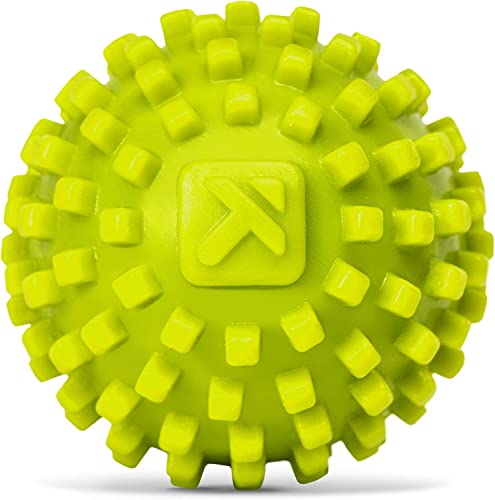
The MobiPoint is the small specialist of the five. At two inches across, with a textured surface of raised tips, it is built for the areas a full-size ball overshoots: the sole of the foot, the palm, the fingers and the forearm. The solid build keeps the tips from collapsing under standing weight, so rolling it under an arch delivers a firm, pinpoint feel closer to a thumb pressing in than to a ball rolling over.
At roughly a tenth of a pound it disappears into a work bag, which makes it the natural desk-drawer pick for hand and forearm work during the day and foot work in the evening. It is too small to be your only ball for glutes or back, but as a second tool it covers ground none of the other four reach.
Specs
- :
- Diameter: 2 inches
- Material: solid textured construction with raised tips
- Item weight: 0.12 pounds per the maker’s published details
- Use areas per maker: feet and hands
- Warranty: one year per the maker
How to choose
Begin with the area you want to work. Feet, hands and forearms reward a small textured ball like the MobiPoint or the bumpy Gaiam Restore. The muscles along the spine need the peanut shape, since a round ball presses on the vertebrae themselves. Glutes, hips, calves and shoulders take a standard single ball in the 2.5 to 2.6 inch range.
Then pick a firmness you can relax into. Solid rubber, like the Kieba pair and the 5BILLION peanut, gives the deepest pressure and suits people with some experience of trigger point work. Firm foam, like the MB1, trades a little depth for a surface that yields slightly, which most beginners tolerate better. Silicone and multi-density sets sit between the two, and texture adds stimulation on the surface without changing the depth much. Temperature is a separate axis: if cold after training or warmth before stretching sounds useful, the Gaiam Restore is the only pick here that offers it.
Finally, think about where the ball will live. A two-pack lets you split home and travel, while a single premium ball makes sense as a daily tool. Every pick here is manual and cleans with a quick wipe or rinse, so upkeep should not drive the decision.
Who should skip
Skip massage balls entirely if you need broad, gentle pressure over a large area; a foam roller spreads load over the quads, lats and back far better than any ball. Skip them, too, if you want powered vibration or kneading, since every pick here is a passive tool driven by your own body weight; a massage gun is the right category for that. Anyone with a recent injury, a healing fracture or a medical condition affecting the area they plan to work should talk to a clinician first, and everyone should keep balls on muscle rather than pressing directly onto the spine, joints or other bony points. If you simply dislike firm pressure, begin with the foam MB1 rather than solid rubber, or skip the category until you have tried a tennis ball and found it too soft.
FAQ
How firm should a first massage ball be?
A firm foam ball is the usual recommendation for a first purchase, because it reaches deep tissue while yielding slightly at the surface. Solid rubber gives more pressure but can feel bruising on bony areas. If a tennis ball already feels like plenty, stay at the softer end; if it feels like nothing, go straight to rubber.
Can a massage ball replace a foam roller?
Not fully. A roller covers broad areas like the quads and the whole back in long strokes, while a ball concentrates pressure on one small spot at a time. Most routines use both: the roller for general work and the ball for the stubborn knots the roller cannot reach. A peanut ball partly bridges the gap for back work along the spine.
How long should you spend on one spot?
Maker guidance across this category generally suggests slow rolls and pauses of roughly 20 to 30 seconds on a tender point, breathing steadily, then moving on. More pressure is not better; lean only as much weight as lets the muscle relax. A short daily session does more than one long, aggressive session per week.
How do you clean a massage ball?
Foam, rubber and silicone balls all clean with a damp cloth and mild soap, then air dry. The Gaiam Restore ball also goes in the freezer or warm water as part of normal use. Keep balls out of prolonged direct sun, and check foam balls now and then for surface cracking, which is the usual sign a foam ball needs replacing.
Final verdict
The TriggerPoint MB1 is the right default: firm enough for real trigger point work, forgiving enough for daily use, and sized for the glutes, calves and back where most people need help. The Kieba two-pack is the budget answer for anyone who wants solid-rubber depth and a spare ball for travel. Add the 5BILLION peanut if your back is the priority, the Gaiam Restore if heat or cold appeals, and the MobiPoint if your feet and hands need a tool of their own. Any of the five will do the job it is shaped for; match the shape to the area and the firmness to your tolerance.
Product and ASIN Reference
| Product | ASIN |
|---|---|
| TriggerPoint MB1 Massage Ball | B016L9K7X8 |
| Kieba Massage Lacrosse Balls, Set of 2 | B01CKJHJRU |
| 5BILLION Peanut Massage Ball | B0F5WTH3VH |
| Gaiam Restore Hot/Cold Trigger Point Massage Ball | B00EANPFWG |
| TriggerPoint MobiPoint Massage Ball | B01LX72D9A |
FAQ
How firm should a first massage ball be?
Can a massage ball replace a foam roller?
How long should you spend on one spot?
How do you clean a massage ball?
More from Amazon
Programs that pair well with the guide above. Offers and eligibility are set by Amazon and may change.
Free shipping on eligible items, Prime Video and more. Eligible new members can start with a free trial.
Start a Prime free trialAudiobooks and podcasts to listen to on the go. Eligible new members can start with a free trial.
Try Audible freeAd-free music streaming. Eligible new subscribers can start with a free trial.
Try Music Unlimited freeA free business account with business pricing and bulk-buying tools for work, shop or home office.
Create a business accountAs an Amazon Associate we earn from qualifying purchases.




Write Your Review
No reviews yet. Be the first to share your experience!